Supplement marketing is good at sounding specific while saying very little. Learning to separate the copy from the actual label is the single most useful skill for buying smarter.
Named Ingredients vs. Proprietary Blends
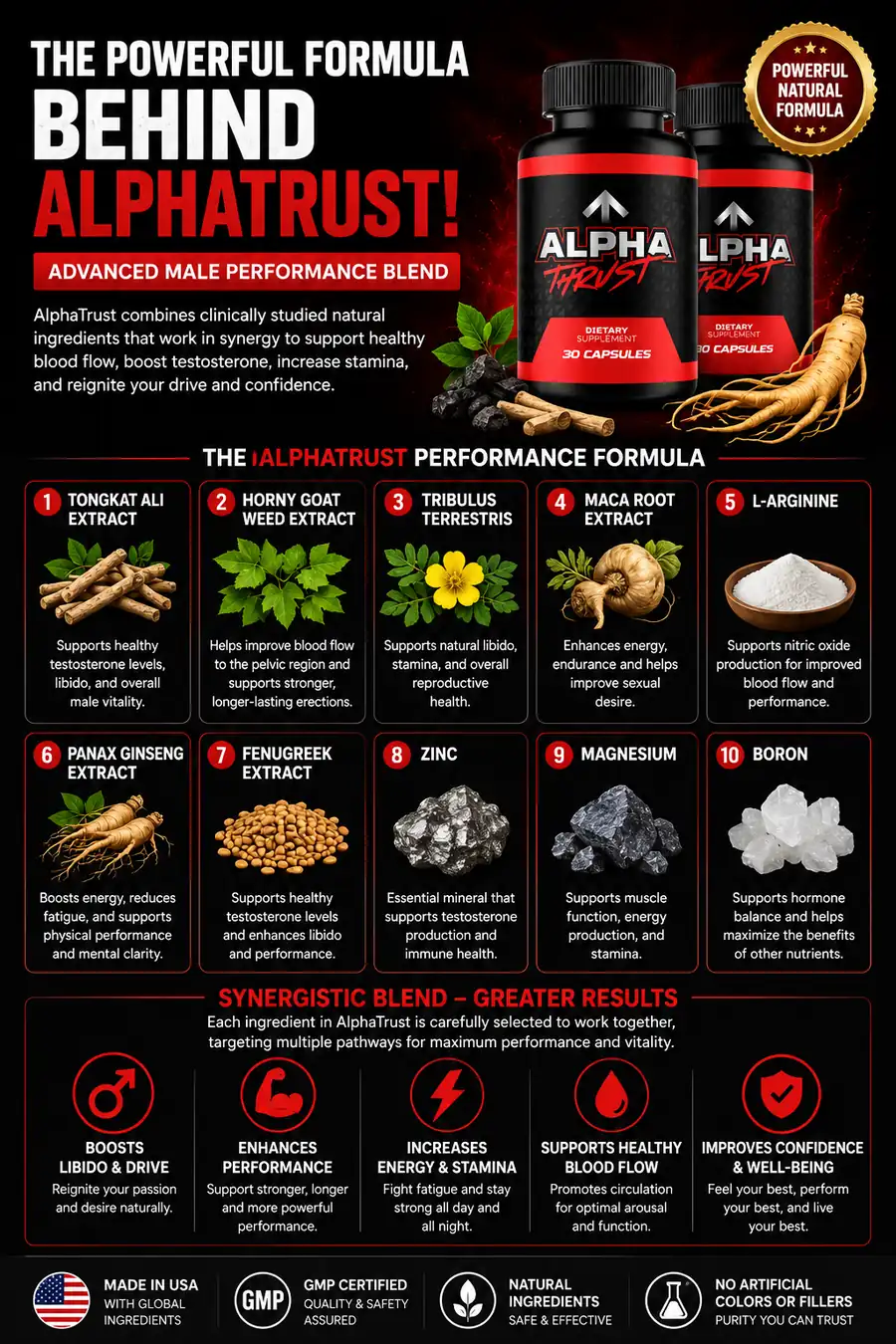
This is the first and biggest filter. Are ingredients listed individually with their own dose, or lumped into a vague "proprietary blend"? A named list — like the twelve ingredients on the AlphaTrust label — lets you actually evaluate what you're taking.
"Clinically Studied" vs. Clinically Studied
Watch for the difference between "this ingredient has been clinically studied" (true of many individual botanicals) and "this product has been clinically studied" (rare, and worth verifying if claimed). Most supplements, this one included, rely on ingredient-level research rather than a trial on the finished formula.
Manufacturing Claims That Actually Mean Something
FDA-registered facility and GMP certification are verifiable, meaningful baseline signals. Vaguer phrases like "premium quality" or "doctor formulated" carry far less weight on their own.
Timeline Language
Claims of overnight or same-day results are a red flag for any nutritional formula. Ingredients with real research behind them, including Ashwagandha and Tongkat Ali, consistently show a multi-week build in the studies behind them.
The Guarantee Tells You Something Too
A short return window doesn't give a gradual-build product a fair chance to work. A 60-day window is a more honest match for how these ingredients are actually studied to perform.